
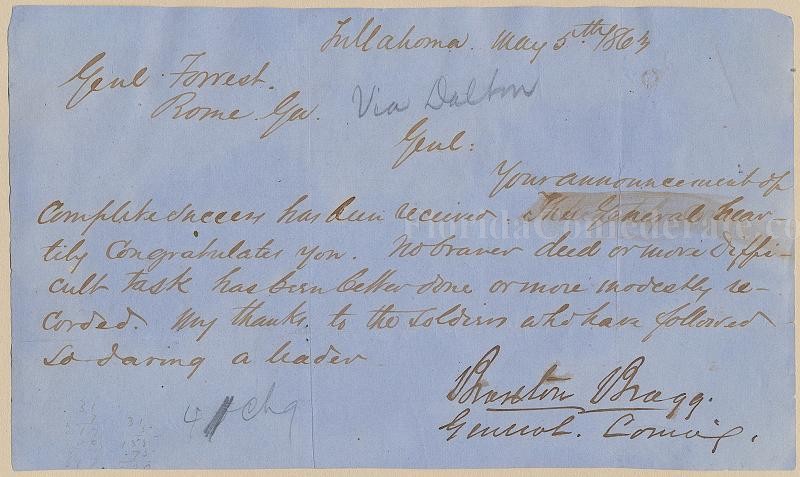
LETTER FROM BRAXTON BRAGG PRAISING NATHAN B. FORREST FOR HIS CAPTURE OF YANKEE COLONEL ABEL STRAIGHT
$3,000.00
Our Catalog
Updated
10/30/2026
Make a choice from any of our categories below
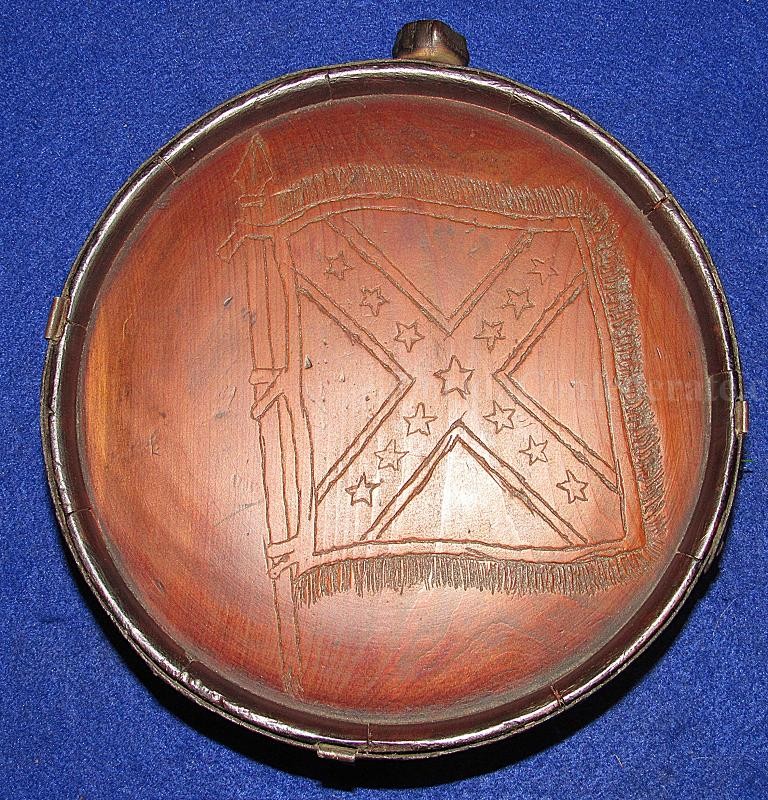
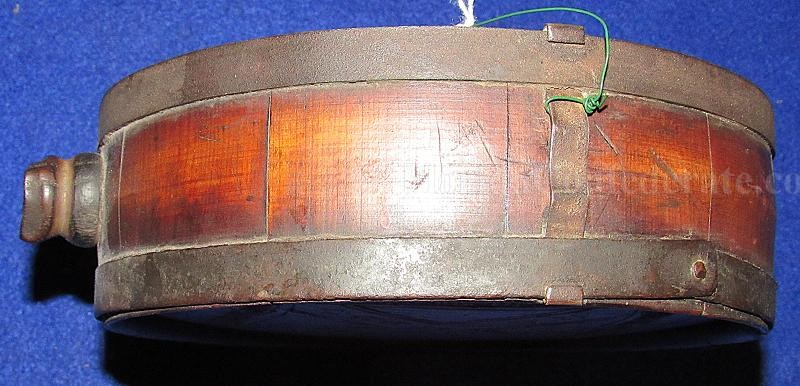
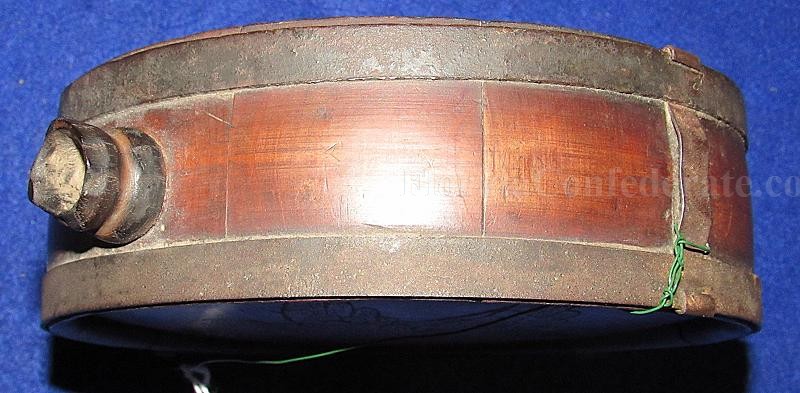
This canteen was in the famed Civil War Collection of the late Bill Turner,
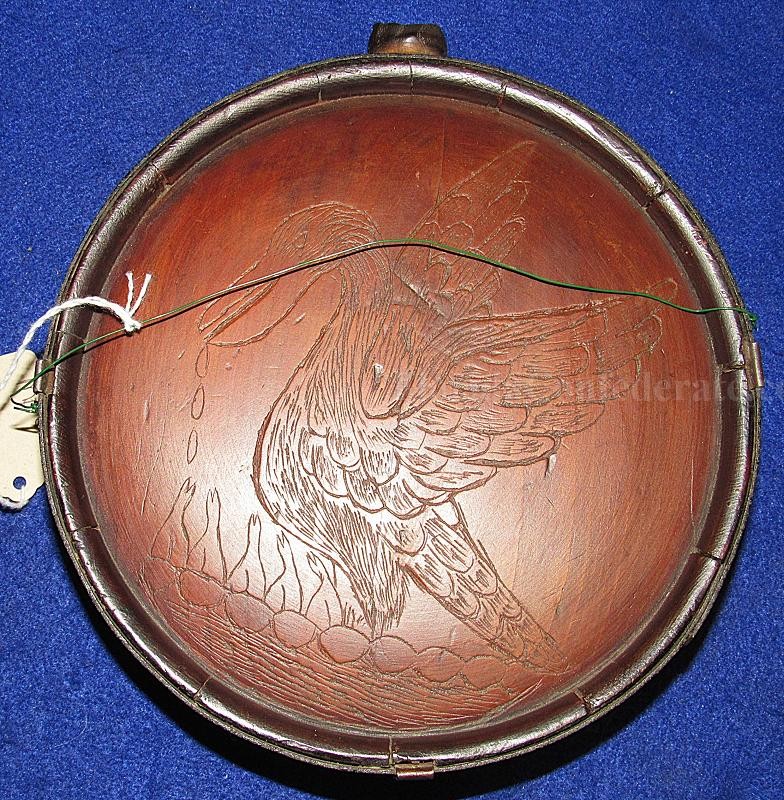
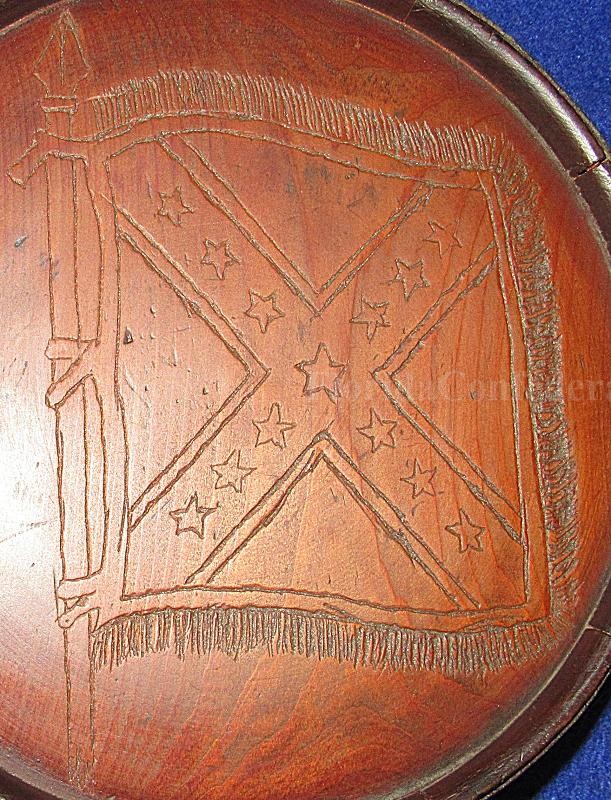
An exceptionally interesting Confederate wooden canteen, distinguished by deeply carved patriotic decoration on both faces. One side displays a Confederate Battle Flag, while the opposite side bears the traditional Louisiana state emblem of the pelican feeding her young. The combination of these two distinctly Southern symbols makes this an unusually attractive and highly desirable example of Confederate soldier folk art.
The pelican emblem, traditionally known as the "Pelican in Her Piety,” depicts a mother pelican nourishing her young and had long been associated with Louisiana. Its presence on this canteen strongly suggests ownership or association with a Louisiana Confederate soldier. Particularly noteworthy is the juxtaposition of the Louisiana state device with the Confederate Battle Flag—an exceptionally evocative combination representing both the soldier's home state and his allegiance to the Confederacy.
The canteen remains in nice, untouched condition, retaining a pleasing surface and the original wooden spout. The carrying sling is no longer present, as is often the case with surviving Confederate wooden canteens. The carving remains readily visible, giving the piece tremendous character and display appeal.
Louisiana played a major role in the War Between the States from the conflict's opening months. The state seceded from the Union on January 26, 1861, and soon became an important source of men, matériel, transportation, and supplies for the Confederacy. Thousands of Louisianians served in Confederate infantry, cavalry, and artillery organizations, fighting in both the Eastern and Western theaters. Louisiana troops distinguished themselves in many of the war's major campaigns, including Shiloh, the Seven Days Battles, Second Manassas, Sharpsburg, Gettysburg, Vicksburg, Port Hudson, Mansfield, and Pleasant Hill.
New Orleans, the South's largest city and one of its most important commercial ports, was captured by Federal forces in April 1862, dealing the Confederacy a serious strategic blow. Nevertheless, Confederate forces continued to operate throughout much of Louisiana for the remainder of the war, and the state became an important part of the Trans-Mississippi Department. The lengthy siege and eventual surrender of Port Hudson in July 1863, together with the fall of Vicksburg, gave the Union control of the Mississippi River, while the Confederate victory at Mansfield in April 1864 helped bring the Federal Red River Campaign to an unsuccessful conclusion.
A particularly appealing Confederate canteen combining genuine utilitarian military equipment with highly personal soldier-carved decoration. The Confederate Battle Flag and Louisiana pelican make this a unique and immediately recognizable Louisiana-associated relic of the War Between the States.
Richard Ferry Military Antiques, Florida’s largest Civil War dealer.If you have ordered an antique weapon or artifact from our website please be advised that these guns are sold strictly as collectible antiques.
FloridaConfederate.com strongly recommends that these artifacts be enjoyed and appreciated for their historical significance and not ever fired. By ordering you are acknowledging these facts, warnings and assume full responsibility for your personal actions with regard to them.
We DO NOT sell modern guns, all our inventory will be pre 1898 and are classified by the ATF as antiques and require no government paperwork to own.