
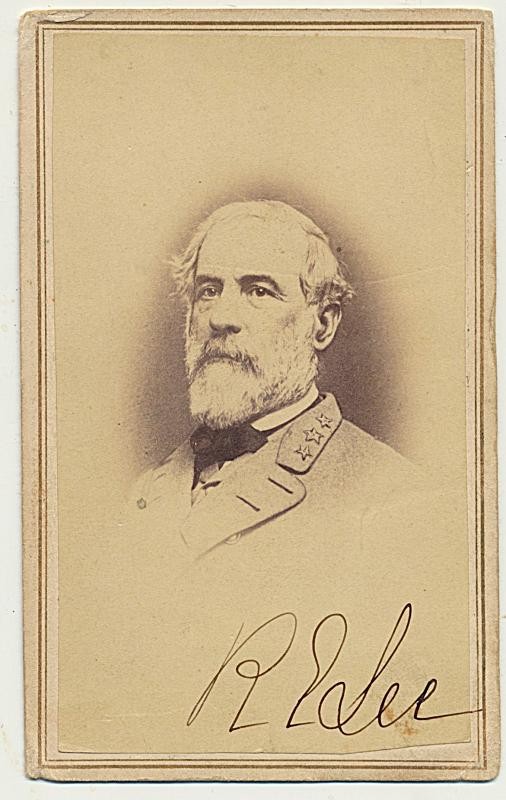
SIGNED GENERAL ROBERT E. LEE VANNERSON CDV PHOTOGRAPH WITH PRESENTATION
$6,500.00
Our Catalog
Updated
10/30/2026
Make a choice from any of our categories below
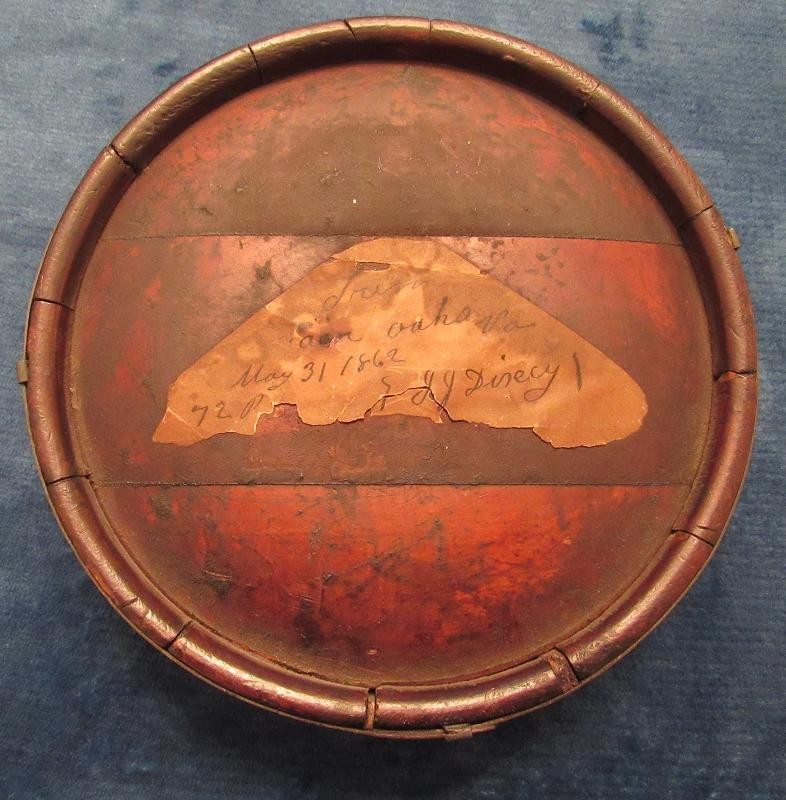
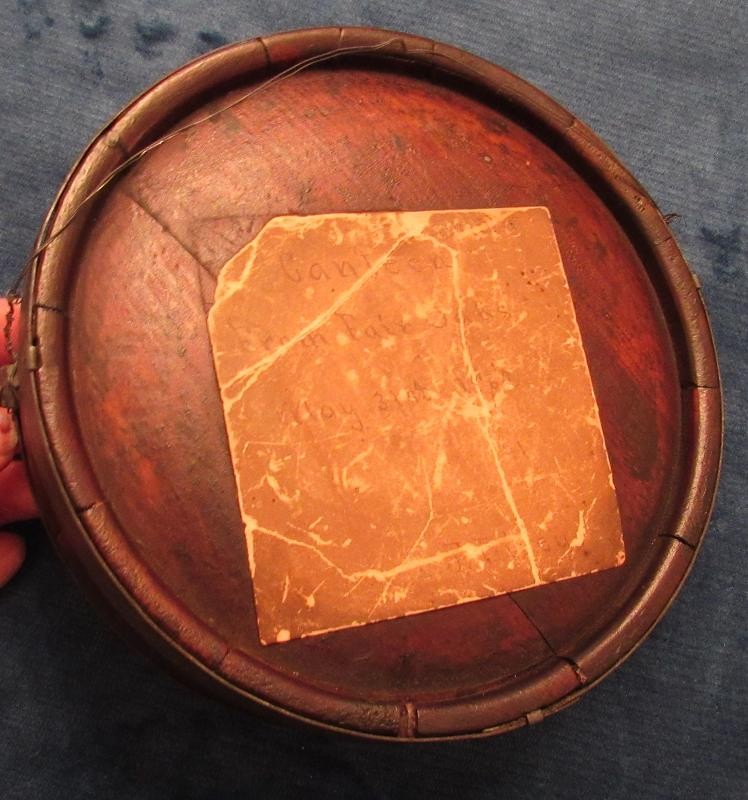
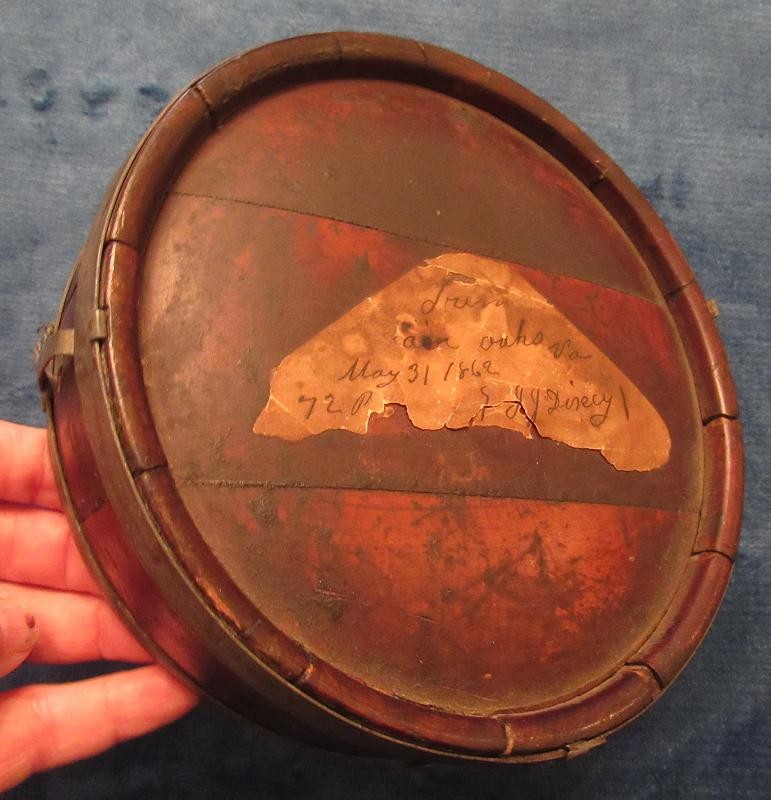
Confederate Wooden Canteen — Battlefield Relic from Fair Oaks, Virginia, May 31, 1862 — Associated with Pvt. Joseph Diackery, 72nd Pennsylvania Infantry
A very appealing and historically significant Confederate wooden canteen with an early battlefield provenance to the Battle of Fair Oaks, Virginia, May 31, 1862. Of particular importance are two old museum or G.A.R. hall-type identification tags that have apparently accompanied the canteen for many years.
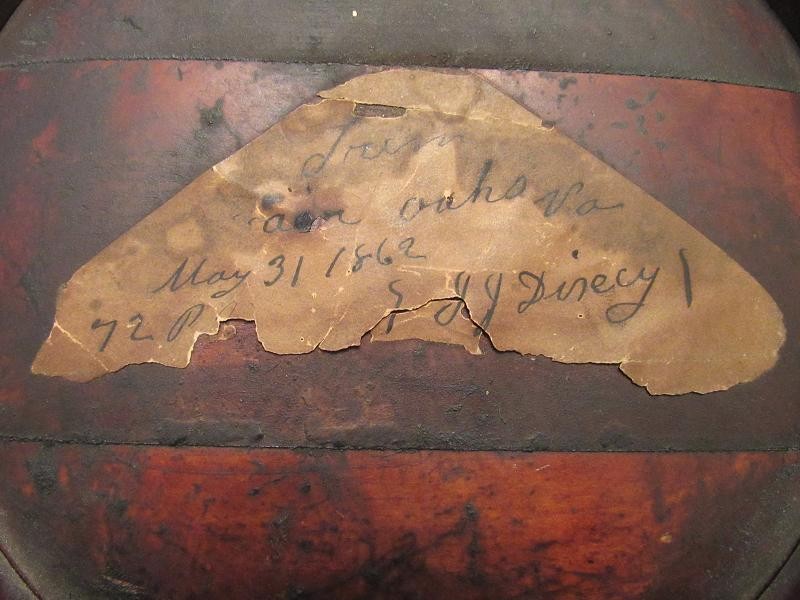
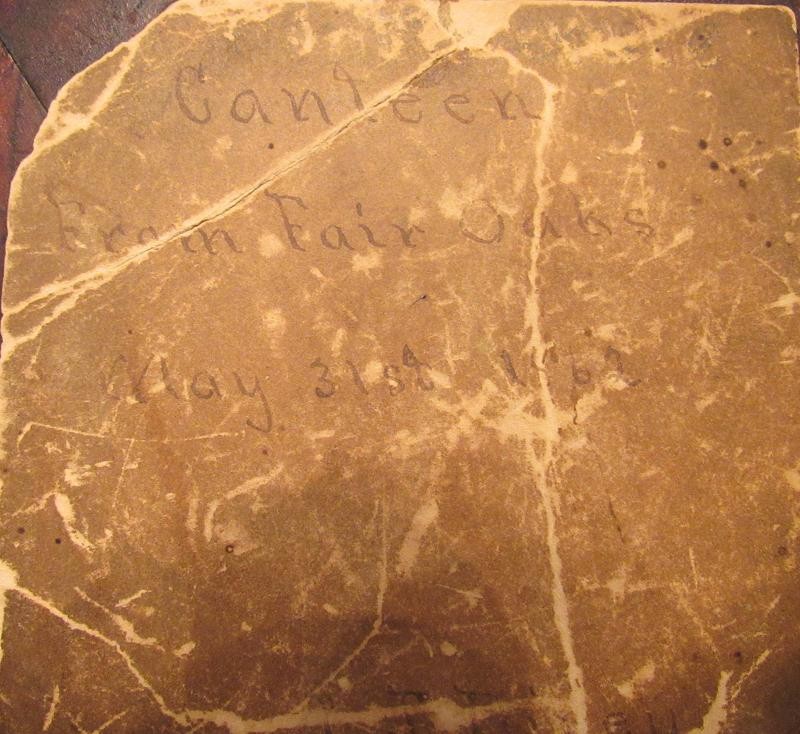
One side bears an old label reading "FROM FAIR OAKS VA. MAY 31, 1862,” together with the notation "72 P” and what appears to be a partially misspelled or phonetically rendered soldier's name resembling "J.J. Di…ecy.” The opposite side carries a second old tag reading "CANTEEN FROM FAIROAKS MAY 31, 1862.” Taken together, these early labels provide compelling evidence that the canteen was recovered or acquired on the battlefield at Fair Oaks and subsequently preserved as a war souvenir.
Research into the roster of the 72nd Pennsylvania Infantry produced one particularly intriguing possibility: Private Joseph Diackery of Company H. Diackery was a Philadelphia soldier who enlisted in August 1861 and served with the regiment through its arduous campaigns with the Army of the Potomac, surviving the war and mustering out with his company at Philadelphia on August 24, 1864. Significantly, the uncommon surname Diackery is documented in a wartime comrade's later account of the 72nd Pennsylvania at Antietam
The 72nd Pennsylvania was one of the most famous Philadelphia regiments of the war. Originally organized as the 3rd California Regiment in Edward D. Baker's California Brigade, it was recruited largely among Philadelphia's volunteer firemen and became widely known as Baxter's Philadelphia Fire Zouaves. Following Baker's death at Ball's Bluff, the brigade became identified with Pennsylvania and the regiment was designated the 72nd Pennsylvania Infantry. It later formed part of the celebrated Philadelphia Brigade—69th, 71st, 72nd and 106th Pennsylvania—of the Army of the Potomac.
Battle of Fair Oaks
The Battle of Fair Oaks, also known as Seven Pines, was fought May 31–June 1, 1862, only a few miles east of Richmond during General George B. McClellan's Peninsula Campaign. McClellan's army had advanced to the outskirts of the Confederate capital but was dangerously divided by the rain-swollen Chickahominy River. Confederate General Joseph E. Johnston recognized the opportunity and attempted to overwhelm the portion of the Union army isolated south of the river before reinforcements could arrive.
On May 31, Confederate troops under D. H. Hill struck the advanced Union positions along the Williamsburg Road, driving Casey's division from its defenses. Confusion and delays among the Confederate columns prevented Johnston's intended simultaneous assault, however, giving the Federals precious time to reinforce the threatened line.
Among the reinforcements was Edwin V. Sumner's II Corps, which made its famous crossing of the flooded Chickahominy. Sedgwick's division crossed the precarious Grapevine Bridge and moved rapidly toward the sound of the fighting. The Philadelphia Brigade, commanded by Brigadier General William W. Burns, included the 69th, 71st, 72nd, and 106th Pennsylvania. At Fair Oaks the 72nd formed on the right of the 71st, and subsequent maneuvering brought Burns' brigade against the Confederate flank. The action constituted one of the 72nd Pennsylvania's earliest serious combat experiences; the regiment suffered five men killed and several wounded.
The battle ended without a decisive tactical victor, but it was strategically important. General Johnston was severely wounded late on May 31, and his incapacitation led to Robert E. Lee assuming command of the Confederate army defending Richmond. Within a few weeks Lee would seize the initiative in the Seven Days Battles and drive McClellan's army away from Richmond.
The 72nd Pennsylvania went on to compile an extraordinary combat record at Savage's Station, Antietam, Fredericksburg, Gettysburg, the Wilderness, Spotsylvania, Cold Harbor and Petersburg. During its service the regiment lost 12 officers and 198 enlisted men killed or mortally wounded. At Gettysburg alone, where the regiment fought at the center of the Union line during Pickett's Charge, the 72nd suffered 44 killed and 146 wounded.
The canteen remains in nice, untouched condition, retaining the extremely desirable old museum/G.A.R. hall identification tags. The original wooden spout and carrying sling are absent. Despite these losses, the canteen's untouched appearance, Confederate construction, specific May 31, 1862 Fair Oaks provenance, and intriguing possible association with Private Joseph Diackery make this an exceptionally interesting battlefield relic with considerable historical character.
Richard Ferry Military Antiques, Florida's largest Civil War dealer.
If you have ordered an antique weapon or artifact from our website please be advised that these guns are sold strictly as collectible antiques.
FloridaConfederate.com strongly recommends that these artifacts be enjoyed and appreciated for their historical significance and not ever fired. By ordering you are acknowledging these facts, warnings and assume full responsibility for your personal actions with regard to them.
We DO NOT sell modern guns, all our inventory will be pre 1898 and are classified by the ATF as antiques and require no government paperwork to own.